
Why Ronono
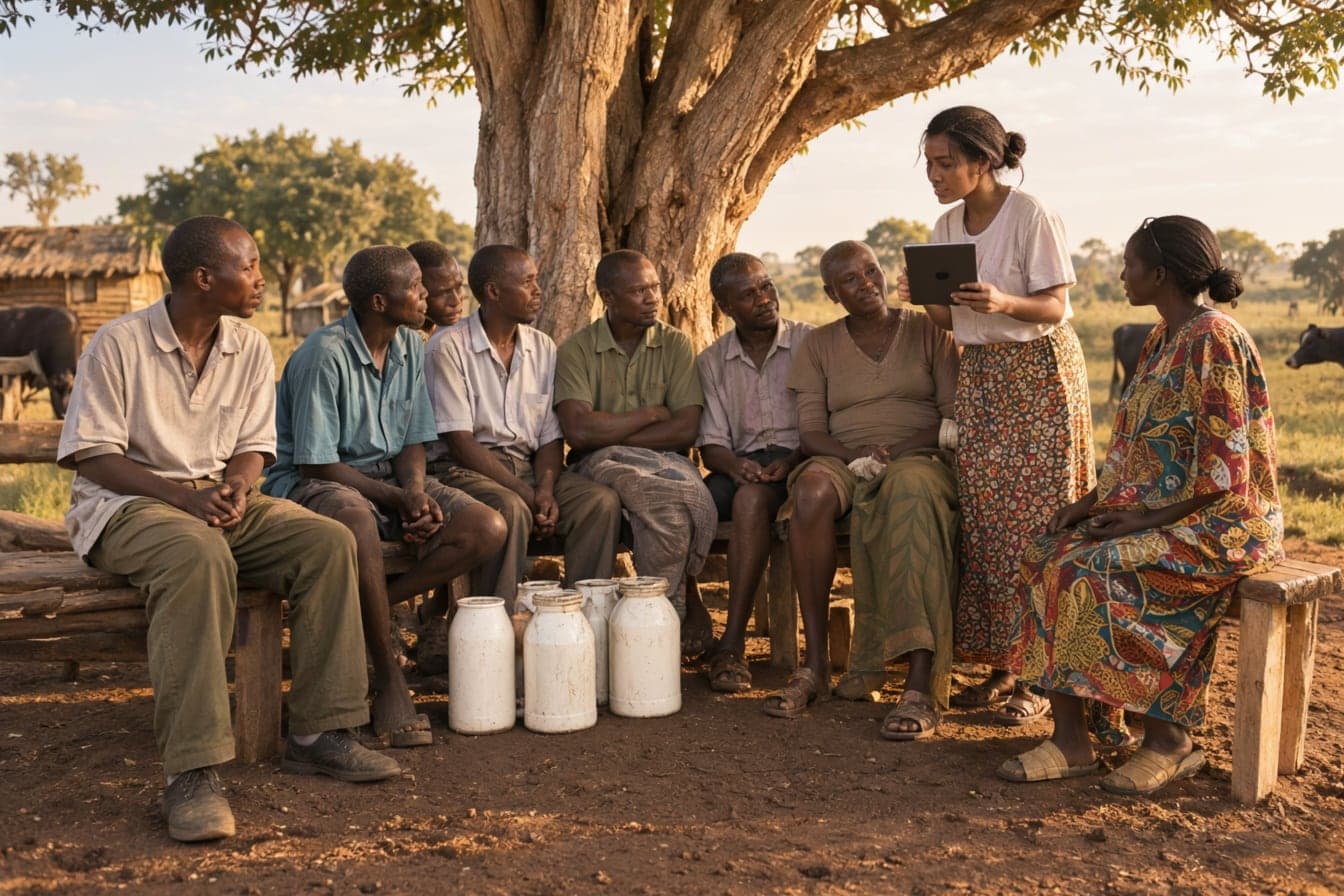
Most of the milk here comes from smallholders: a few cows, a few litres, every single morning. Ronono makes each of those litres count, then helps the centre see what comes next.

01
Made for smallholders
Dozens of farmers a morning, prices by farmer and grade, payouts by MVola, Orange Money, Airtel Money or cash, in Ariary. The daily routine of a centre, not a factory’s.
02
Works when the network doesn’t
The reception desk keeps recording offline and syncs when the connection returns. Phones, cheap laptops and the Android app all run on the same data.
03
AI that respects the numbers
Answers come from your records, never from a guess. The model is open and can run on your own server, so the centre stays in control of its data.
04
French and English
The whole app, the AI answers and the production steps work in French and English: ready for Madagascar and the French-speaking markets around it.
Where it can take you
Today
Out of the notebook
Every can is recorded, tested and priced at the desk. Farmers are paid on schedule and the end-of-month count stops being a week of work.
Weeks
Trusted milk
Watered or unusual deliveries are flagged against each farmer’s own history. Quality improves because everyone knows it is measured.
Months
A centre that sees ahead
Volume forecasts from the weather, a morning summary by email and answers on demand. Decisions are taken on figures, not on memory.
Seasons
Surplus becomes value
Milk that would have spoiled becomes cheese, yoghurt, butter or ghee, with recipes, batch records and a review of what works best.
Years
Ready to grow
Clean books, a full audit trail and reliable records of every farmer: what a bank, a buyer or a partner asks for before investing in a centre.
Beyond Madagascar
From the Malagasy highlands to East and West Africa, smallholder milk reaches the market through collection centres that often still run on paper. Ronono starts in Madagascar, with Ariary and mobile money, and is built so that a centre anywhere can record, check, forecast and transform its milk, and show books it can trust.
Set up intake, prices and payouts in Ariary, in French or English, with offline support at the reception desk.